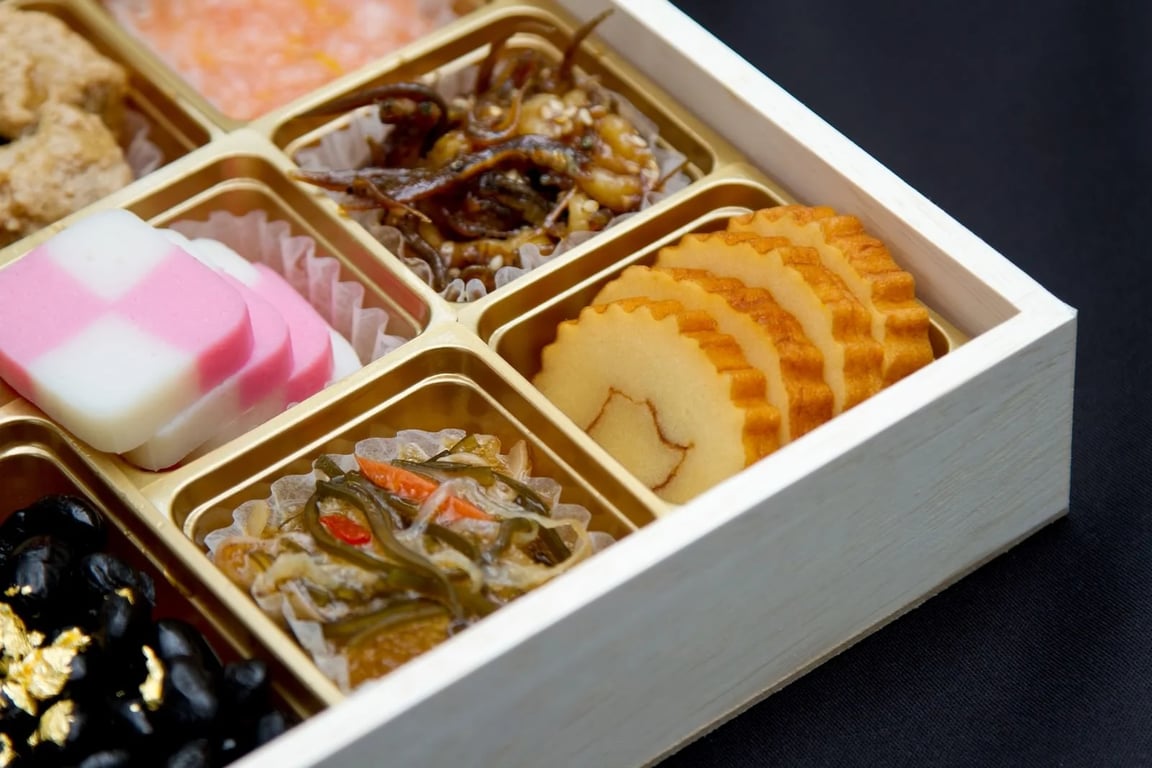


For those of you who are interested in Japanese culture, the New Year probably has a special ring to it. From the end of the year through to the New Year, the whole of Japan is enveloped in a solemn yet festive atmosphere.
In particular, the food eaten during this time of year is packed with Japan's history and people's warm wishes for a happy new year.
This time, we will introduce three typical gourmet foods enjoyed by Japanese people from New Year's Eve (Omisoka, December 31st) through the New Year: "Toshikoshi Soba," "Osechi Ryori," and "Omochi." If you learn about the deep meaning behind each dish and how delicious they are, you will be able to appreciate the charm of Japan even more deeply.
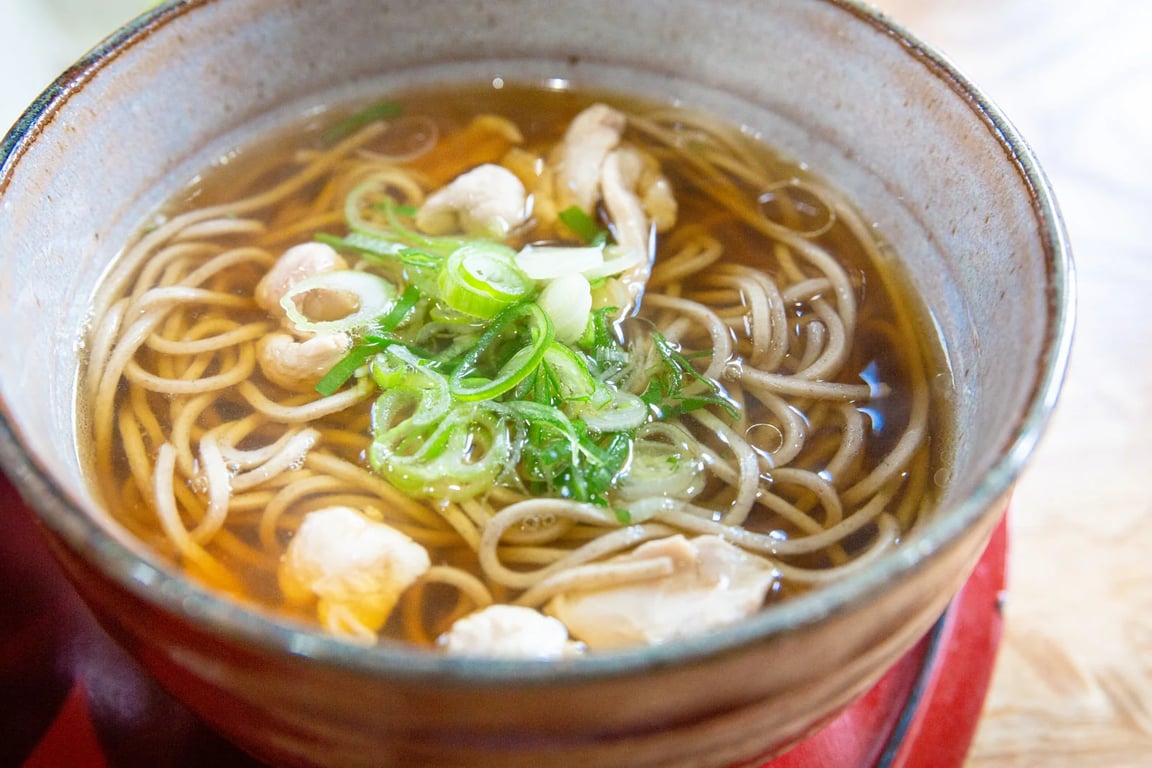
The Japanese New Year begins with a bowl of warm soba noodles on New Year's Eve.
1. Why eat soba?
The custom of eating toshikoshi soba is said to have spread during the Edo period. It's not just because it's delicious. People have placed special wishes on soba noodles because of their "long, thin shape" and "ease of breaking them."
• Wishing for longevity and the continued prosperity of the family:
◦ It is a wish for a long life, that one may live a long and slender life like soba noodles. It also means that family ties will continue for a long time.
• Eliminate disasters:
◦ Soba noodles are easier to break than other noodles, so the meaning of this is "cutting off the misfortunes and hardships of the past year cleanly and welcoming the new year."
It is said that it is best to finish eating it before the new year begins, in order to "not carry over bad luck into the next year."
2. Simple deliciousness
For toshikoshi soba, simple dishes such as warm kake soba or kitsune soba topped with fried tofu are generally popular. The gentle flavor of the dashi stock, carefully made from bonito flakes and kelp, warms the body and soul on a cold winter's night.
It is also common to top it with green onions as a condiment. Green onions sound similar to the word "negi-rau" (to be grateful) and are said to also represent gratitude for the hard work of the past year.
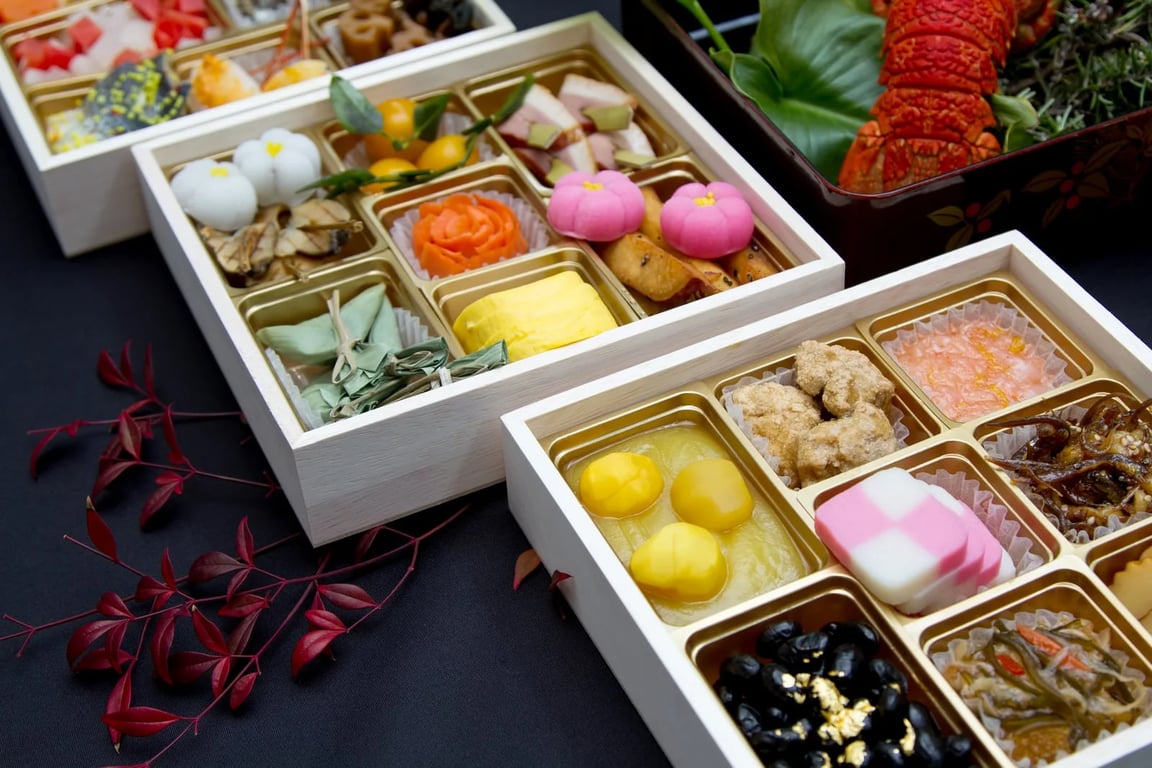
The colorful "osechi ryori" (New Year's Day) is eaten to welcome the New Year, starting on January 1st. Beautifully packed in multi-tiered boxes, osechi not only looks stunning, but each dish is imbued with deep meaning and wishes.
1. The origin of "Osechi" and the meaning of "Jubako"
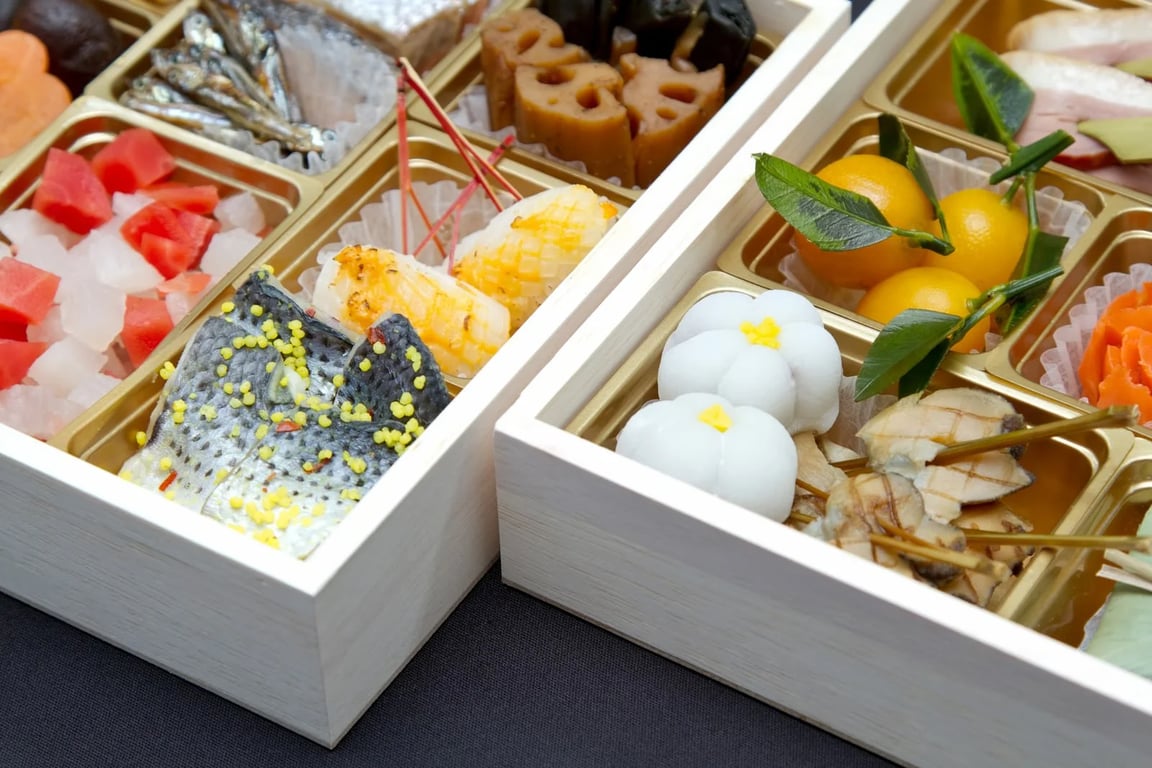
The roots of osechi cuisine can be traced back to the ancient custom of "osechiku," in which offerings were made to the gods at the change of seasons (seasonal festivals). Eventually, the term "osechi" came to refer only to the food eaten during the most important time of the year, New Year's.
Packing osechi in a tiered box has the meaning of "adding joy" and "adding happiness."
2. Typical dishes that convey wishes
Each dish in Osechi has a lucky meaning.
• Black beans:
◦ It is a wish that one will be able to work diligently (diligently and in good health). Black is also a color that wards off evil.
• Herring roe:
◦ The eggs are herring eggs, and because there are so many of them, they represent the wish for prosperity of descendants (an increase in the family).
• Tadukuri (rice crackers):
◦ These are baby sardines simmered in a sweet and spicy sauce. In the past, when sardines were used as fertilizer for rice fields, it resulted in a good harvest, and so this dish is imbued with the wish for a bountiful harvest.
• Chestnut Kinton (Kurikinton):
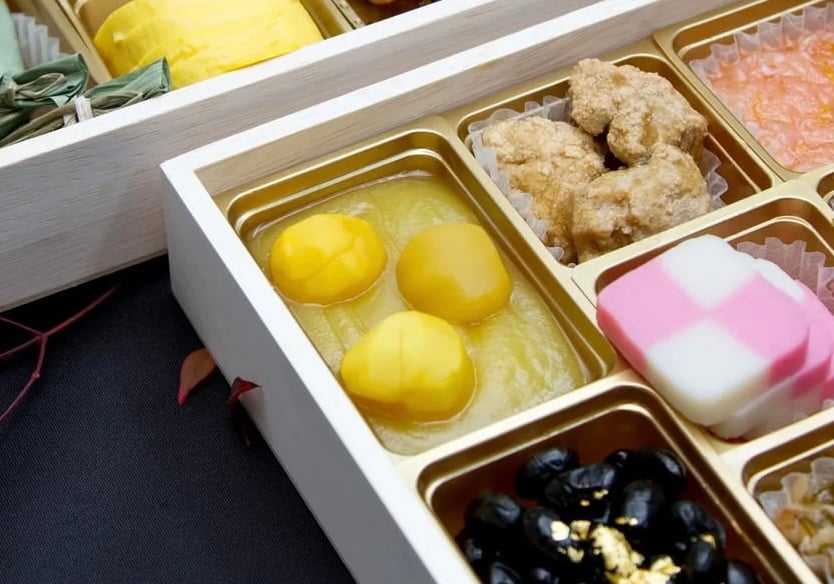
◦ Because of its vibrant golden color, it is considered an auspicious item for financial luck and wealth. "Kinton" is also written as "kindan."
• Red and white kamaboko (kouhaku kamaboko):
◦ The red color represents protection from evil and the white color represents purity. The beautiful semicircular shape symbolizes the first sunrise of the year.
Many of these dishes are prepared so that they can be preserved for a long time, and this is also an old-fashioned wisdom that tells us not to be busy cooking in the kitchen during the first three days of the New Year (1st to 3rd January), but to spend the time relaxing and welcoming the gods (Toshigamisama).
Mochi (rice cakes) are an essential food when talking about New Year's. They are made through the traditional Japanese event of mochi pounding and have been considered a sacred food.
1. Ozoni: A dish shared between gods and humans
Ozoni is a soup that is eaten on the morning of New Year's Day. It is made by simmering rice cakes as the main ingredient, along with various ingredients such as vegetables and chicken.
The rice cakes used in ozoni are eaten after taking down the "kagami mochi" that has been offered to Toshigamisama (the god of the new year). By receiving the offerings to the god, one hopes to receive his power and stay healthy and free from illness for the year.
2. The taste of "Ozoni" varies greatly depending on the region
The appeal of ozōni lies in its diversity. Japan is a long country stretching from north to south, and the seasonings, ingredients, and shape of the mochi vary surprisingly depending on the region.
• Kanto region (e.g. Tokyo):
◦ It is mainly seasoned with sumashi soup (a clear, light soup based on salt and soy sauce), and square mochi (rice cakes) called kakumochi are often used.
• Kansai region (e.g. Kyoto and Osaka):
◦ It is mainly seasoned with miso (a thick miso-based soup), and round mochi (round rice cakes) are often used. The round shape represents "enman" (harmony), and is also a wish to avoid any hard feelings.
When you visit Japan, be sure to try the ozoni of the region you are visiting and experience the local culture.
3. The meaning of Kagamimochi
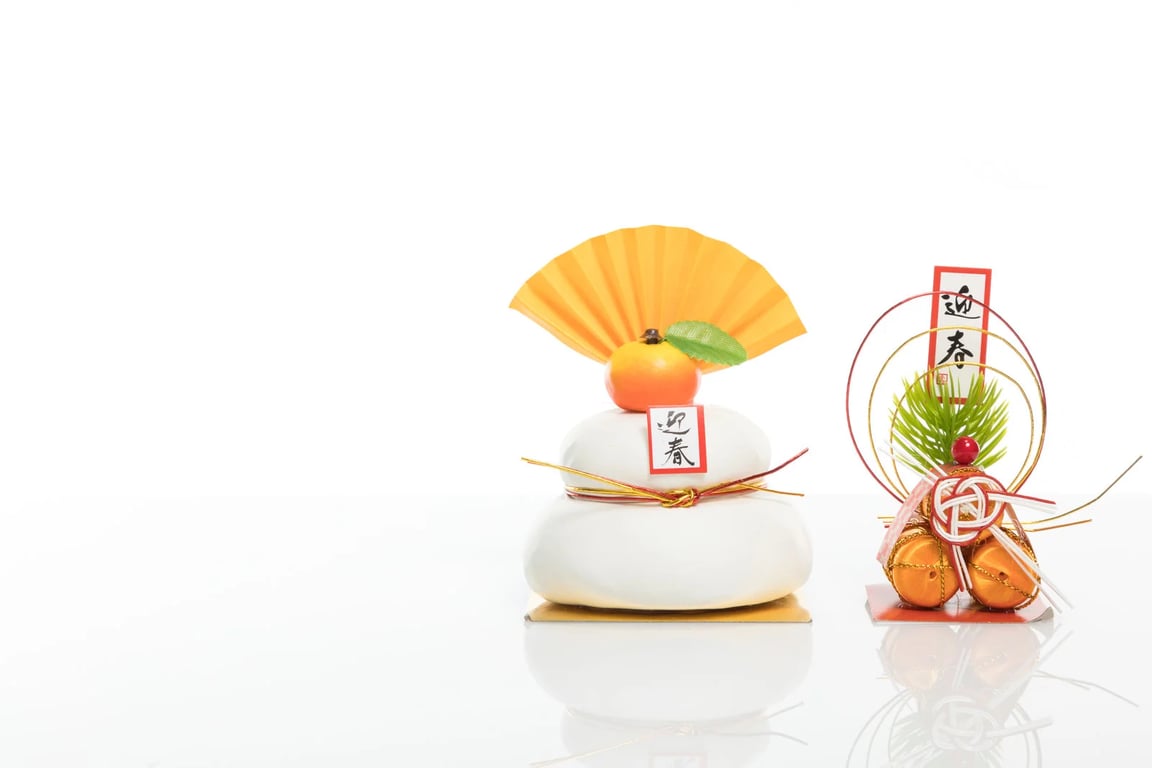
Kagami mochi is a stack of two rice cakes, one large and one small, that are displayed in the tokonoma alcove or living room during the New Year. It was named after the round shape of the mirror (which was believed to be the place where gods resided) from long ago.
The two rice cakes stacked on top of each other represent the moon (yin) and the sun (yang), and are meant to symbolize the accumulation of good fortune and the gradual passing of years in harmony.
The charm of Japan: "spiritual richness" that requires effort
What charms of Japan have you felt through these New Year's cuisine guides?
Japanese New Year's dishes are not all easy to make. Many are prepared with a lot of time and effort. This means that rather than simply making a "lavish feast," important, intangible wishes such as "family happiness," "health," and "prosperity" are expressed through food.
In modern Japan, more and more households purchase osechi ryori from department stores or specialty shops, but the traditional meaning, the love of parents that is infused into each dish, and the gratitude towards nature remain unchanged.
Cutting off bad luck with toshikoshi soba noodles, bringing good luck with osechi cuisine, and receiving the power of the gods with ozoni - Japan's "gourmet New Year" is more than just a meal; it is an important ritual to welcome the start of the year with care and warmth.
If you have the opportunity to visit Japan over the New Year holidays, be sure to try these dishes. If you savor each one while eating, you will surely be touched by the hearts of the Japanese people and experience the profound depth of this country's culture.
Please enjoy Japan's warm New Year to your heart's content.
Also check out " Deep Nightlife: Japan's Izakaya Culture "
https://tenposstar.com/ja/articles/r/3818
Also check out " What is Edomae Sushi, Tokyo's local B- class gourmet food? Introducing its characteristics and history! "
![[2026 Update] Head to Minamiboso in Winter! A Day Trip Driving Plan to Enjoy Spectacular Views, Strawberries, and All-You-Can-Eat Seafood](https://imagedelivery.net/0Xfr734EZhL-f9btSNh4FQ/uploads/article/01KEXH672R9D8EBMSS85QFC7AS.jpg/public)