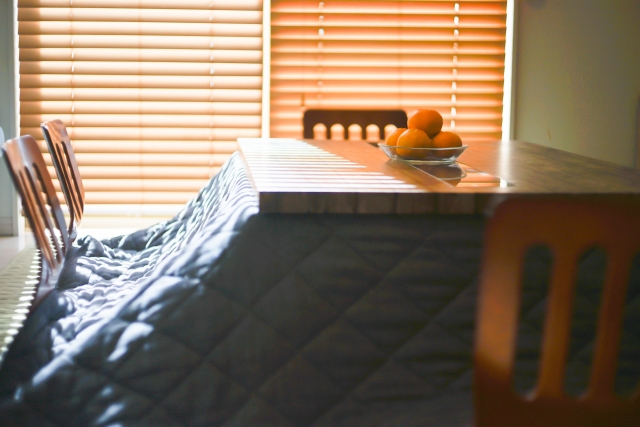


Winter in Japan can be deep and snowy in some areas, but there is a magical tool in Japan that can make even the cold seem sweeter: the kotatsu.
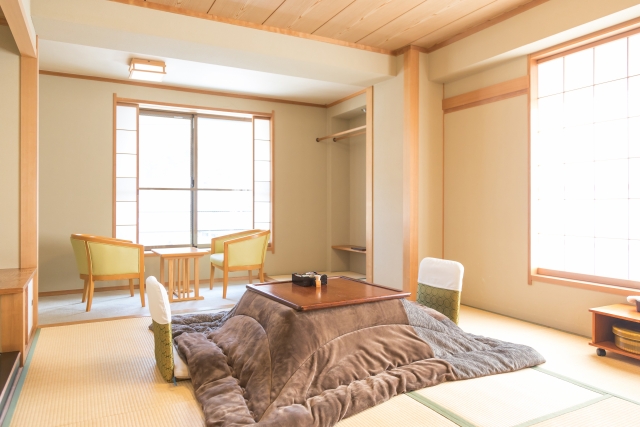
Have you ever seen a scene in a Japanese anime, drama, or movie where the whole family gathers around a low table, covered with something like a futon, and enjoys a cozy time together? That is the kotatsu, the ultimate winter item that the Japanese love so much.
A kotatsu is more than just a heating device. It is a place with a mysterious power that brings people together, frees their minds, and even slows the flow of time. Because once you enter, you can never get out, Japanese people even affectionately call it "magic furniture."
In this article, we will introduce in detail how the kotatsu, a traditional winter feature in Japan, works, how to properly spend time under it, and the happy times it creates.
Osechi, mochi, and toshikoshi soba! Check out our complete guide to Japanese gourmet New Year's for foreign visitors to Japan.
https://tenposstar.com/ja/articles/r/3881
First, for those who are unfamiliar with kotatsu, let us briefly explain its structure.
The structure of a kotatsu
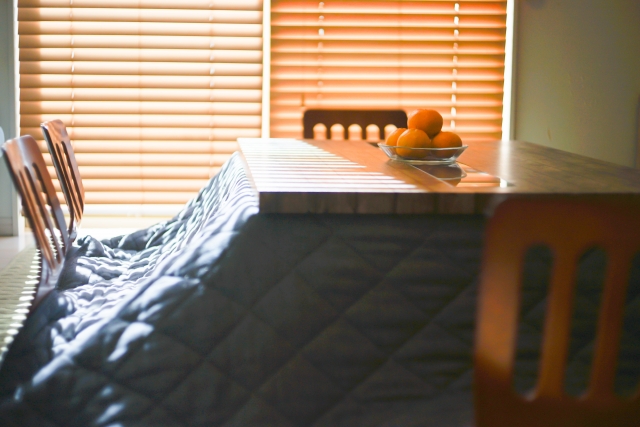
A kotatsu is surprisingly simple to make: it basically consists of a low wooden table frame with an electric heater attached to the underside.
A thick futon, specially designed for kotatsu, is placed over the table frame, and finally, a hard board called a top plate is placed on top of the futon.
That's all it takes. However, when you turn it on, the electric heater heats up the inside of the futon, creating a cozy little room that blocks out the cold air outside.
Healthy ways to warm your feet
There is an old Japanese health rule, "zukan sokunetsu" (keeping your head cool and your feet warm). It means that keeping your head cool and your feet warm is good for your health. A kotatsu is a device that does just that. Unlike air conditioners, warm air doesn't accumulate at the ceiling, making you feel dizzy, but instead warms your feet and lower body, which tend to get cold easily, from the inside out.
The history of the kotatsu
Today's kotatsu are electric, but their history dates back to the Muromachi period (approximately 500 years ago). At that time, it is said that a platform was placed on top of an irori (hearth), a place where a charcoal fire was built, and a kimono was placed over it.
Over time, the heat source has changed from charcoal to electricity, and the style has evolved, but the style of "everyone sitting around one heat source" has remained unchanged for hundreds of years.
Simply sitting in a kotatsu and getting warm is a joyful experience, but there is a "standard style" for maximizing your happiness. Be sure to remember this to fully enjoy the Japanese winter.
1. Mikan (mandarin orange)
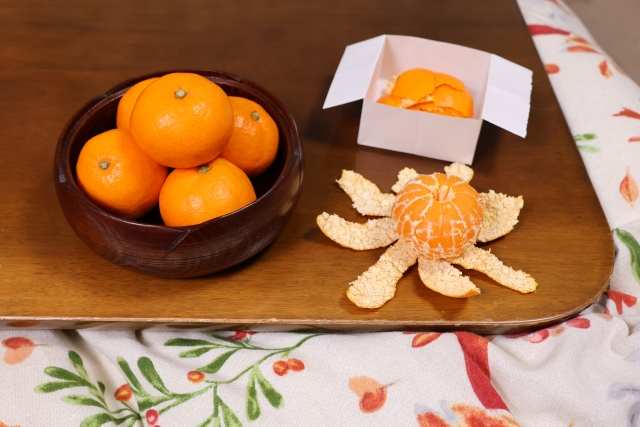
Kotatsu and mikan are a golden combination that cannot be separated in Japan.
The sight of a basket piled high with mandarin oranges on the kotatsu tabletop is a symbol of winter in Japan. While sitting in the warmth of the kotatsu, you can peel the cold, juicy mandarin oranges with your hands and bring the sweet and sour flesh to your mouth. The contrast between "warm" and "cold" is amazing.
Mandarins are also rich in vitamin C, which helps prevent colds, making them a logical food to eat during the dry winter months.
2. Japanese tea
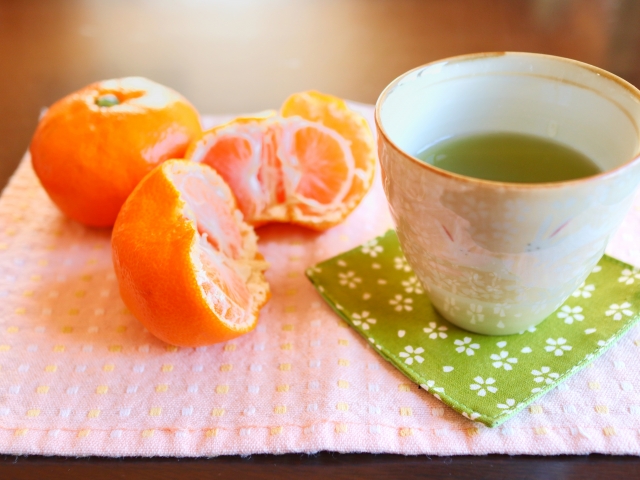
After eating the mandarins, you'll want some hot Japanese tea (green tea). Sit in a kotatsu, wrap your hands around a teacup, and sip the tea while blowing on it. The sigh of "Ah, what happiness" that escapes at that moment is the sound of winter in Japan.
We also recommend fragrant roasted green tea and brown rice tea.
3. Cat
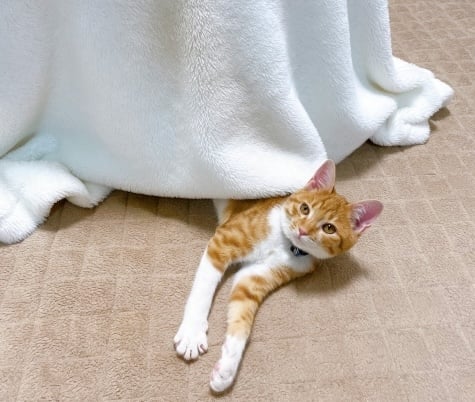
If you're lucky, there will be a cat there. Cats love kotatsu so much that there's a Japanese proverb that goes, "Cats curl up in a kotatsu."
If you lift up the kotatsu futon, you might find a cat sleeping happily inside. Spending time in a warm kotatsu with an even warmer cat is the ultimate relaxation.
A hub for family get-togethers
In modern life, family members are increasingly spending their time apart, each in their own room looking at their smartphones, but when winter arrives and a kotatsu appears in the living room, the situation changes completely.
In search of warmth, the whole family naturally gathers around the kotatsu.
Sitting knee-to-knee in the small space of a kotatsu naturally leads to conversation. You can talk about what happened today, watch TV together, or eat a hot pot. The kotatsu is a device that brings family bonds together, shortening not only physical distance but also emotional distance.
Unfortunately, it's rare to find a kotatsu in a typical business hotel, but there are several places where travelers to Japan can experience one.
Traditional inn
The most reliable place to enjoy a kotatsu is at a traditional Japanese inn. Many inns provide kotatsu in their Japanese-style rooms, especially during the winter. The experience of relaxing in a yukata, sitting in a kotatsu placed by a window with a view of the snowy scenery, will surely be a highlight of your trip to Japan.
Guesthouses and traditional Japanese cafes
Kotatsu tables are often found in the shared spaces of backpacker guesthouses and "kominka cafes" that have been renovated from old Japanese houses. There, travelers who have just met and locals gather around the kotatsu to deepen their connections. There is a friendly atmosphere there, where "everyone is a friend once they sit under the kotatsu."
Izakaya with sunken kotatsu tables
For those who are not comfortable sitting in a seiza or cross-legged position, we recommend the sunken kotatsu.
This type of kotatsu has a sunken floor underneath it, allowing you to put your feet down as if you were sitting on a chair. This sunken kotatsu style is used in many izakayas and private rooms in Japanese restaurants.
It is very popular with foreign tourists because you can take off your shoes and relax without hurting your feet. When making a reservation at a restaurant, be sure to ask, "Do you have a Horigotatsu?"
Finally, here are some tips to help you enjoy your kotatsu safely and comfortably.
Don't fall asleep like that
The warmth of a kotatsu is a powerful sleeping pill. There's a high chance that you'll fall asleep while sitting in one. However, if you sleep in a kotatsu until morning, your body's temperature regulation will not work properly, and you may become dehydrated or catch a cold.
Taking a nap can be the ultimate happiness, but when it's time to get some serious sleep, move to your futon.
With clean socks
A kotatsu is a shared space where everyone puts their feet. When sitting in a kotatsu at a ryokan (Japanese inn) or a friend's house, it is good manners to wear clean socks.
Ventilate occasionally
When you spend too much time in a kotatsu, the air in the room tends to become stale. Open the window every now and then to let in some fresh, cool air. The warmth when you get back in the kotatsu afterwards is exceptional.
A kotatsu is more than just a heater. It is a sanctuary of comfort and tranquility, symbolizing the Japanese "uchi" (inside) culture.
On a cold winter's day, stretch your legs in a kotatsu while listening to the wind chime outside. In front of you are your precious family and friends, steaming tea and mandarin oranges. There may be no flashy entertainment, but the time passes more peacefully and fulfillingly than anywhere else in the world.
When you visit Japan, don't just visit the tourist spots, but also take off your shoes and sit in a kotatsu. The warmth that gently reaches your feet isn't just the heat of the electricity; it's the very essence of Japan's tranquil daily life and the warmth that welcomes you.
Check out Hokkaido's trip to enjoy the finest snow and cuisine