

From autumn to winter, steaming oden is lined up on the shelves of Japanese convenience stores. Its fragrant aroma warms the hearts of many Japanese people. While it may seem a little strange to foreign tourists, convenience store oden is a wonderful opportunity to experience Japanese culture. In this article, we will introduce the appeal of Japanese convenience store oden, the steps for purchasing it, and a ranking of the most popular ingredients.

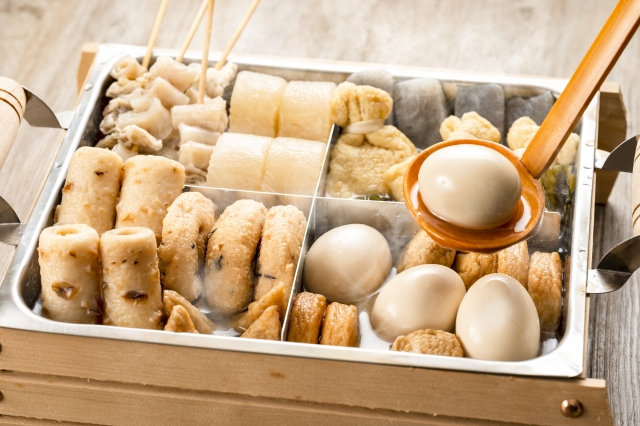
Konbini oden is a stewed dish called "oden" that is sold in Japanese convenience stores. A large pot is placed next to the cash register in the store, where various ingredients such as daikon radish, eggs, chikuwa (fish cake), and konjac are simmering in warm broth.
Oden is a dish made by slowly simmering fish paste, vegetables, eggs, and other ingredients in a special broth made from soy sauce, mirin, kelp, and bonito flakes. It can be made at home, but you can also buy it at convenience stores, choosing just the ingredients you like. It is loved by many people because it is a convenient way to eat something warm and allows you to experience Japanese food culture.
Why is convenience store oden so appealing?
There are several reasons why convenience store oden is an appealing Japanese cultural experience.
Convenience: You can easily purchase a single hot meal 24 hours a day. It's perfect for a late-night snack on a cold day or when you're feeling a bit hungry. (This may not be available at all stores or at certain times.)
A wide variety of ingredients: Depending on the convenience store, you can enjoy a wide variety of ingredients, such as local specialties and seasonal ingredients. It is not uncommon for a single store to have more than 10 different ingredients on display.
The delicious flavor of the broth: The key to the flavor of oden is the broth that the ingredients are thoroughly infused with. Convenience stores also make their oden broth with great care, and the deep umami gives you a real feel for Japan's dashi culture.
Seasonal feel: As it is sold towards the start of the cold winter months, it is popular as a food that evokes the four seasons of Japan.
For foreign tourists, ordering oden at a convenience store from a cashier might seem a bit intimidating. But don't worry! It's very easy, so please use this guide to give it a try!
Choose your ingredients: First, stand in front of the oden pot and choose the ingredients you want to eat. Most convenience stores have a board with the names of the ingredients written on it next to the oden pot, so it's a good idea to use that as a reference.
Tell the cashier: Once you've decided what ingredients you want, tell the cashier their names. You can also point and say, "I'd like this, this, and this, please." It will be even smoother if you remember the Japanese names of the ingredients, such as "daikon" (radish) or "tamago" (egg).
Check the container and broth: The waiter will put your chosen ingredients into a special container. At this time, you may be asked, "Would you like broth?" Since broth is the key to the flavor of oden, it is recommended that you answer, "Yes, please."
Paying: Once the ingredients and soup stock have been placed in your container, you can pay. You can also pay for other items at the same time.
Ask for toppings (condiments): Oden may be served with condiments such as mustard or miso sauce. If asked, "Would you like mustard?", try answering "Yes." If you don't like mustard, answer "No."
Receive: Finally, receive your warm oden and enjoy the taste of Japan.
There are a wide variety of ingredients for oden. From the standard to the slightly more unique, each has a different texture and flavor. Here we will introduce the ingredients that are most popular among Japanese people, ranked.
No. 1: Daikon (Japanese radish)
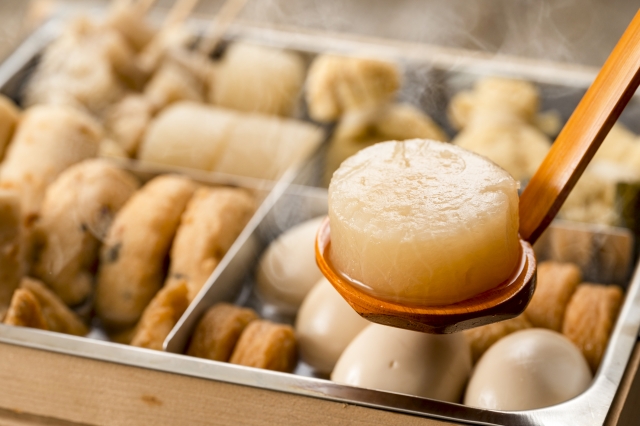
The king of oden is undoubtedly daikon radish. By simmering it slowly for a long time, the flavor of the broth permeates all the way to the core, and it becomes so soft that it crumbles when you put your chopsticks in it. With just one bite, the sweetness of the daikon radish and the umami of the broth fill your mouth, warming your heart.
2nd place: Eggs
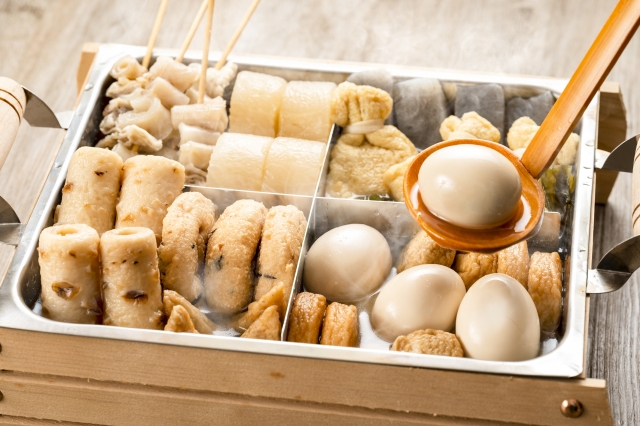
Eggs are a classic ingredient in oden. Boiled eggs simmered in dashi stock have an exquisite balance of the rich flavor of the yolk and the flavor of the dashi stock that has permeated the white. It's a comforting taste that everyone will love.
3rd place: Chikuwa
This fish paste is made by wrapping minced fish around a bamboo stick and grilling it. It absorbs a lot of broth and has a fluffy texture. The holes in the stick, which are soaked up with broth, are especially delicious.
4th place: Hanpen
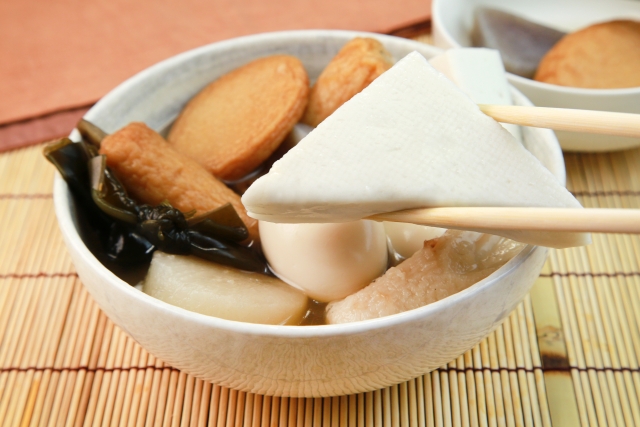
It is a fluffy, pure white fish paste made by adding ingredients such as mountain yam to fish paste. It is often used in oden in the Kanto region. It has a light and soft texture, allowing you to fully enjoy the delicate flavor of the dashi stock.
No. 5: Konjac
This ingredient is made from konjac yam and is characterized by its unique elasticity and chewiness. It is low in calories and healthy, making it popular among health-conscious people. The flavor of the broth is easily absorbed, giving it a simple yet deep taste.
Other popular ingredients
Beef tendon: This is beef Achilles tendon that has been simmered for a long time, and is characterized by its melting texture and rich flavor. It also adds body to the oden broth.

Mochi-iri Kinchaku: Mochi rice cakes stuffed inside deep-fried tofu. The combination of the deep-fried tofu that has absorbed the broth and the soft, creamy mochi is exquisite.
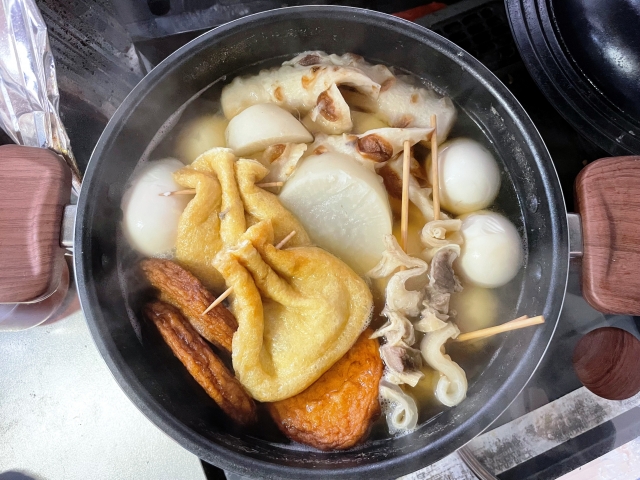
Atsuage: Thickly sliced tofu that has been deep fried. It absorbs plenty of broth and allows you to enjoy the flavor of the tofu and the fragrant aroma of the fried tofu.
Burdock root rolls: Burdock root wrapped in fish paste. The crunchy texture and flavor of the burdock root add a special touch.
Convenience store oden is a culture deeply rooted in people's lives.
Gathering around a warm bowl of oden with family and friends on a cold day, or picking up a bowl of your favorite ingredients at a convenience store on your way home from work... Oden symbolizes the warmth of everyday life in Japan.
Japanese convenience stores are places where you can experience the food culture and lifestyle of that country. If you have the opportunity to visit Japan, be sure to purchase and try the oden next to the register. You'll be able to feel the warmth of Japanese culture from the steam rising from the oden.